01Amazon · Lead UX Designer · Feb 2025 — Present
Working Backwards AI
A generative-AI decision-support platform that simulates feedback from virtual customers and domain experts — helping Amazon Product Managers craft better ideas, refine product concepts, and write PR/FAQ documents faster.
The Problem
PMs were flying blind until the review meeting.
Product Managers at Amazon faced three interconnected pain points:
- Fragmented insights access. Customer data lives across disconnected systems, forcing PMs to manually synthesize information and lose context along the way.
- No early feedback. PMs don't receive objective critique until review meetings — after substantial time investment — leaving them unsure about customer focus and narrative direction.
- Unclear expert involvement. Uncertainty about which domain experts to consult, and when, creates fragmented collaboration and late-stage rework.
At Amazon's scale — 315M active customers and 438M annual customer-service contacts — this friction is expensive. Customer-experience issues discovered post-launch affect millions of users and cost $1.28B annually in customer service.

Research
Listening before designing.
Competitive analysis
Existing AI tools like ChatGPT and Notion AI lack Amazon-specific customer data, CX-defect knowledge, and Working Backwards principles. External tools operate as isolated chatboxes that require constant manual context transfer.
PM interviews — 5 participants
- PMs wanted risks incorporated directly into PRFAQs, not post-generation rewrites
- They needed references to existing Amazon solutions and implementations
- They asked for clearer priority, ownership, and actionability behind identified risks
- They wanted stakeholder-specific views (Legal, CS, Ops)
- They wanted deeper insights connected to COEs, incident reports, and mitigation strategies
"I don't want to spend another two hours rewriting the document — help me integrate the risks directly."
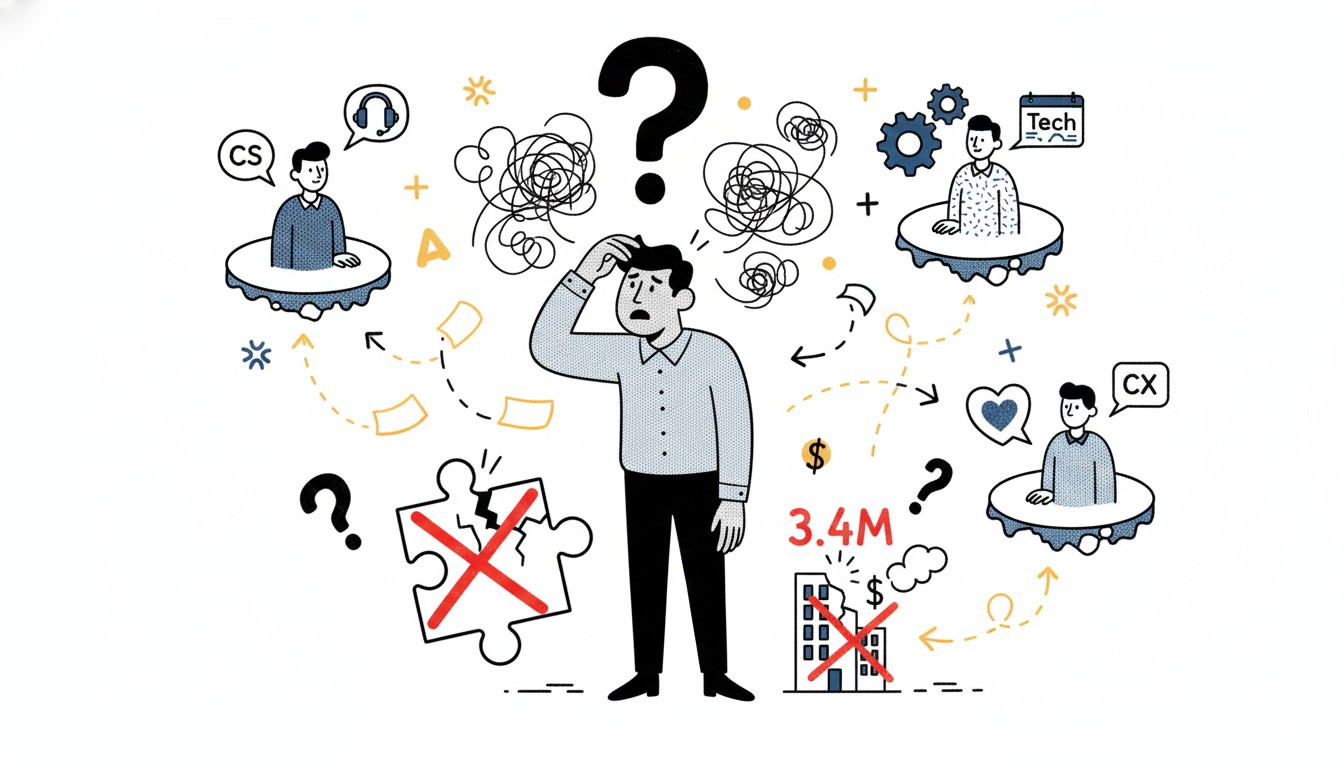
Domain expertise lives on disconnected islands — PMs don't know who to consult, or when.
Ideation workshop
Cross-functional sessions with PMs, TPMs, and Tech partners revealed that PMs rely on intuition rather than structured customer signals, that insights are scattered across systems, that tools feel reactive and surface issues too late, and that inconsistent processes produce variable document quality.
Strategy
From a feature to a platform.
We shifted from a narrow "CS-risk predictor" feature to a comprehensive 0→1 AI decision-support platform by reframing the problem and rescoping the product, prioritizing features with a value-complexity matrix, and building a roadmap that balanced near-term feasibility against the long-term vision.

The Solution
A virtual review meeting, on demand.
AI-powered ideation
Users input simple prompts or context; WBAI automatically surfaces customer problems, opportunity spaces, and concept directions — eliminating lengthy chat interactions.
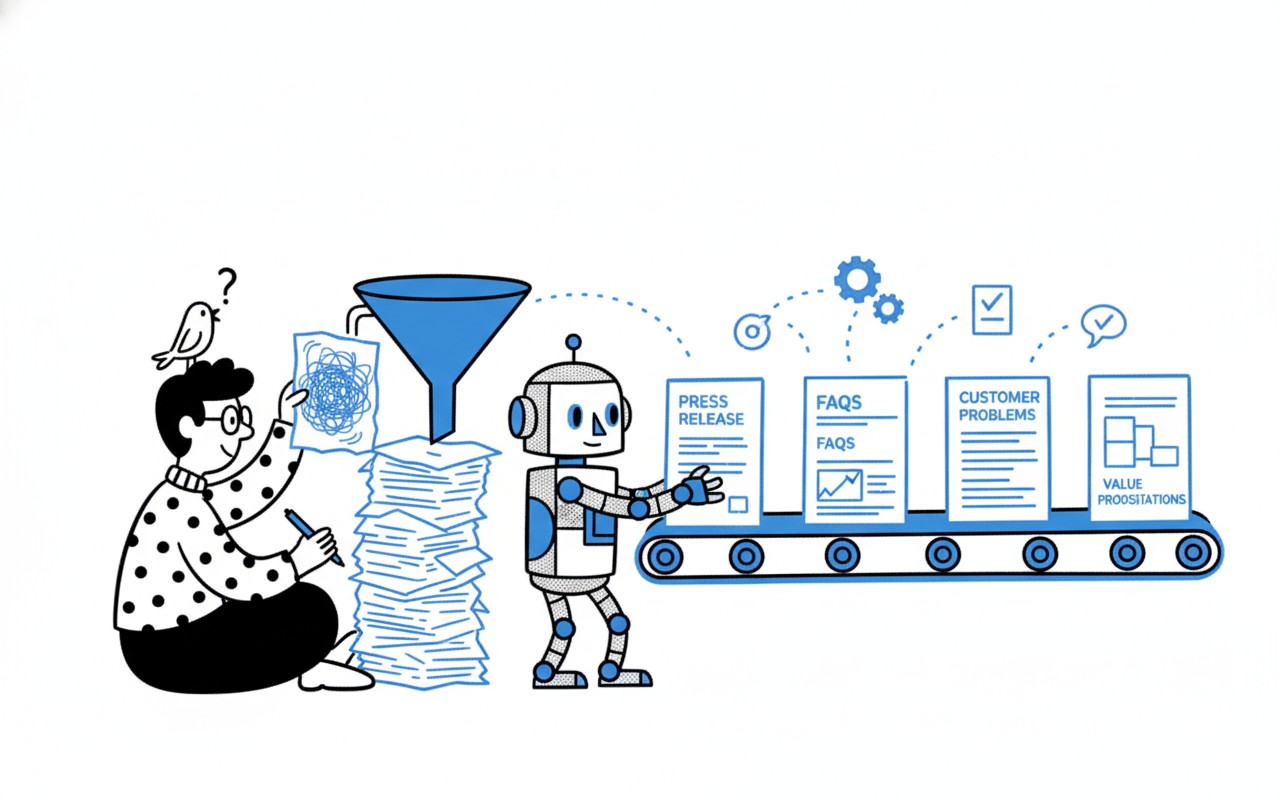
PRFAQ generation
Structured document creation supported by customer personas, CX insights, and expert agent perspectives, built on Amazon's 5 Customer Questions framework.
Virtual customer feedback engine
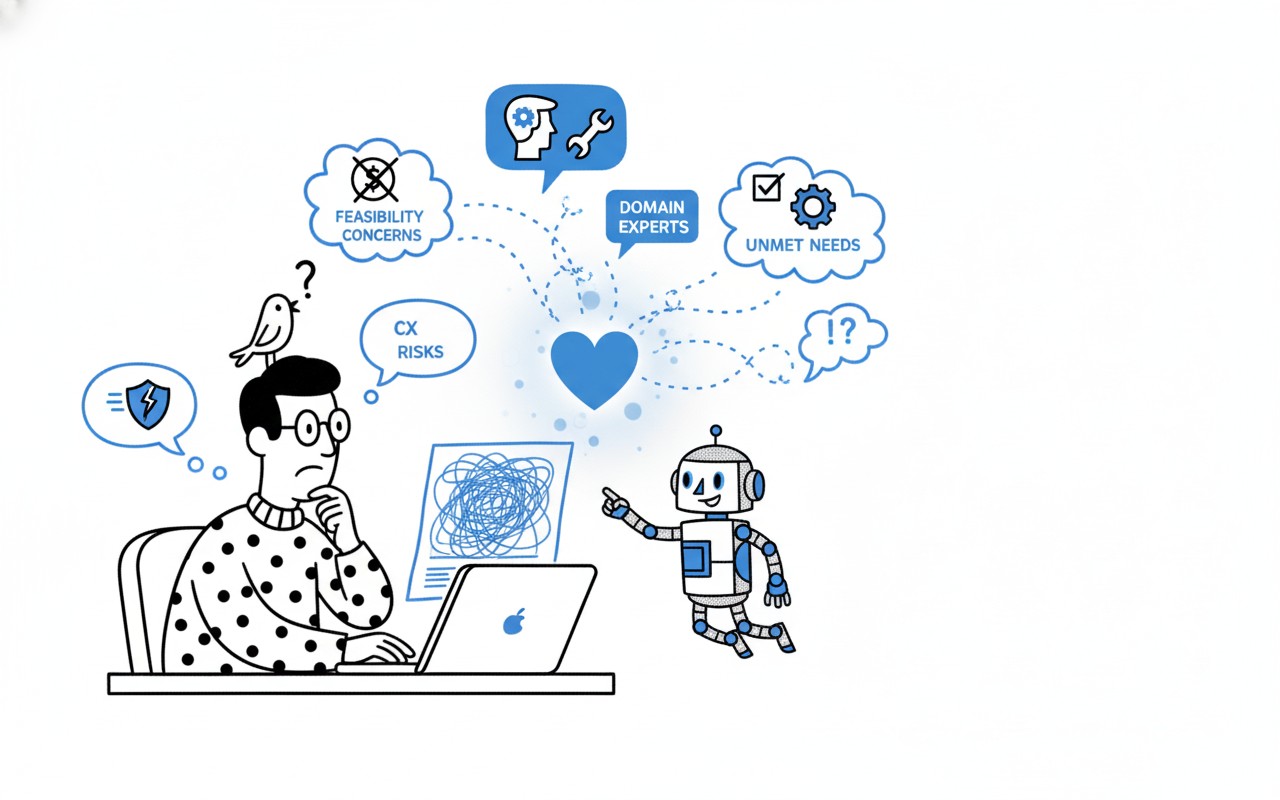
Multi-agent orchestration simulates feedback from virtual customers and domain experts. Comments reflect realistic customer reactions to proposed experiences, making abstract risks concrete and highlighting blind spots early.
Document workspace
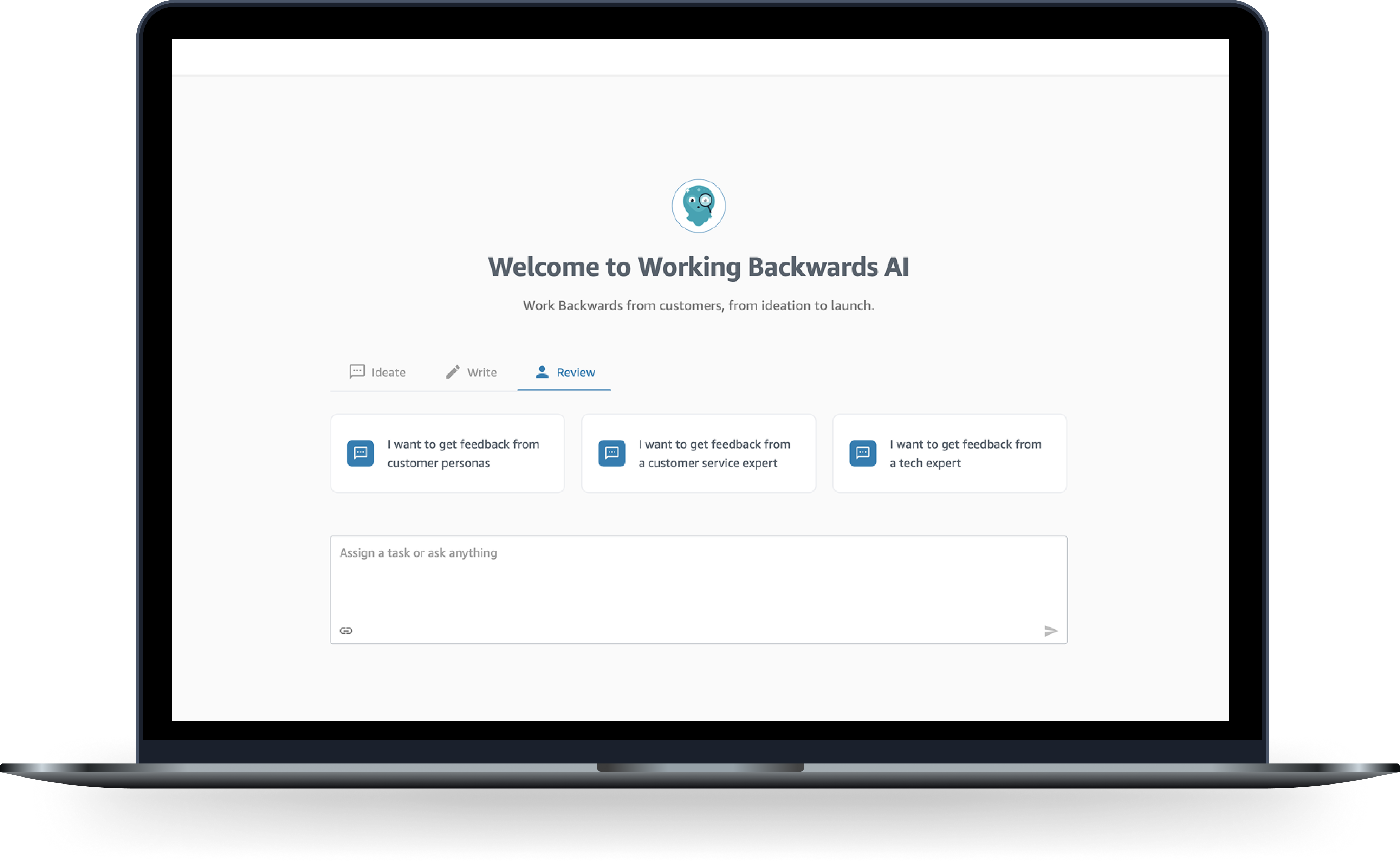
An end-to-end experience supporting ideation, generation, refinement, and collaboration — with agent-based commenting, version control, export, and stakeholder-specific views and filters.
Outcomes
Launched, adopted, and loved.
Users reported higher confidence in product narratives, faster iteration cycles, and deeper exploration of customer and technical risks — an experience they compared to "having a virtual review meeting." One user noted the tool "picked out three very good risks" that directly influenced roadmap decisions.
Beta testing with 22 senior Product and Program Managers showed WBAI outperforms existing tools by combining Working Backwards rigor with AI-powered speed, while introducing virtual customer and expert feedback capabilities nothing else offers.